
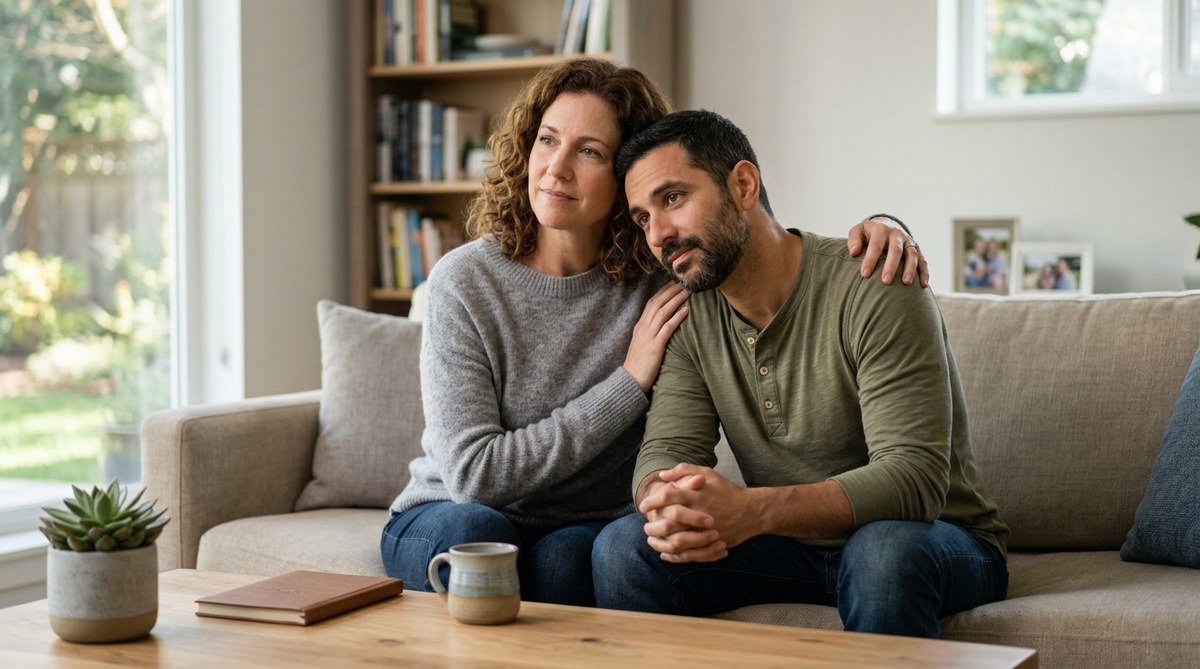
When someone you care about is living with post-traumatic stress disorder, every day can feel like a high-wire act. You want to be there, to help, to make things better. But you also feel the weight of their pain, and sometimes it is hard to tell where their struggle ends and your own exhaustion begins. You are not alone in that balancing act. Millions of Americans provide support for a family member or friend with PTSD, and most of them wrestle with the same question: How do I offer real help without losing myself in the process?
Supporting someone with PTSD does not mean sacrificing your own mental health. This guide covers seven practical strategies to help you be a steady presence for your loved one, communicate with compassion, set healthy boundaries, and recognize when your own cup needs refilling. You will also learn how to encourage professional treatment and what to do when you feel overwhelmed.
Understanding PTSD and the Role You Play
PTSD is not just a collection of bad memories. It is a complex condition that changes how the brain processes fear, stress, and safety. Your loved one may experience flashbacks, nightmares, hypervigilance, or emotional numbness. They might avoid places or people that remind them of the trauma. And they may struggle to trust even the people who love them most.
Your role is not to be their therapist. It is to be a safe, consistent presence. That sounds simple, but it is hard work. The first step is education. When you understand what is happening in their brain, you stop taking their reactions personally. Their irritability is not about you. Their withdrawal is not rejection. It is the trauma speaking.
If you want to go deeper into how PTSD affects the nervous system, read our article on what happens in your brain during trauma. Knowledge is the foundation of compassionate support.
Seven Ways to Support a Loved One with PTSD Without Burning Out
Here is a practical numbered list of steps you can take. Each one is designed to help you be effective while also protecting your own energy.
- Learn their triggers and warning signs. Every person with PTSD has unique triggers. Some are obvious, like loud noises or news about violence. Others are subtle, like a specific smell or the tone of someone’s voice. Ask your loved one what sets off their symptoms, when they feel safe, and what helps them calm down. Write it down if you need to. This information is gold.
- Ask what they need in the moment, and listen. You might assume they want to talk about what happened. They might actually need silence, a distraction, or a glass of water. Say something like, “I am here for you. Would it help if we sat quietly, or would you prefer to take a walk?” Let them lead.
- Stay predictable and calm. PTSD makes the world feel dangerous. Your steadiness can be an anchor. Keep your routines, your tone of voice even, and your reactions measured. If you feel yourself getting upset, step away for a minute. Come back when you are regulated.
- Help them connect with professional help, but do not push. Encourage therapy gently. Offer to help them find a therapist, drive them to appointments, or sit in the waiting room. But respect their timeline. For more on what works, check out understanding the role of therapy in healing from PTSD.
- Establish boundaries together. This is crucial. Boundaries are not walls. They are agreements that protect both of you. For example: “I can listen for 20 minutes, then I need to make dinner.” Or “It is okay to wake me if you have a nightmare, but not to yell at me.” Talk about boundaries when everyone is calm, not in the middle of a crisis.
- Take breaks without guilt. You cannot pour from an empty cup. Schedule time for yourself every day, even if it is just 15 minutes to breathe or walk. Your loved one’s recovery is a marathon, not a sprint. Your own well-being matters.
- Celebrate small victories. Recovery is not linear. Some days will be hard, and some days will be better. Notice the progress: a good night’s sleep, a calm conversation, a moment of laughter. Acknowledge it out loud. Hope grows in those small moments.
Common Mistakes Caregivers Make (And What to Try Instead)
| Mistake | Why It Happens | A Better Approach |
|---|---|---|
| Trying to fix everything | Love and urgency make us want to “solve” the trauma | Say: “I cannot fix this, but I am right here with you.” |
| Walking on eggshells | Fear of triggering a reaction | Name the elephant gently: “I want to be careful, but I also want to be real with you.” |
| Neglecting your own needs | Guilt about putting yourself first | Remind yourself: my health is part of the support system. If I break, we both lose. |
| Giving unsolicited advice | Thinking you know what is best | Ask: “Do you want advice, or do you just need me to listen?” |
| Expecting gratitude | Caregiving can feel invisible | Acknowledge the lack of thanks, but find validation elsewhere (a friend, a support group, a journal). |
How to Communicate When It Gets Hard
Communication is the tightrope of PTSD care. You want to be honest, but you also do not want to cause pain. Here are three rules that can help.
- Use “I” statements. Instead of “You are overreacting,” try “I feel worried when I see you struggling.” This removes blame and opens a door.
- Validate before you redirect. When they share a feeling, first say something like “That sounds really hard.” Then, if needed, you can gently ask a question or offer a suggestion.
- Give them an exit. In conversations about the trauma, let them know they can stop anytime. Say “We can pause whenever you need to.” This gives them control, which is often what they lost in the first place.
“The most healing thing you can say to someone with PTSD is not ‘I understand’ but ‘I believe you.’ Belief restores a sense of reality that trauma shattered.”
— Dr. Karen Treisman, clinical psychologist and trauma specialist
Taking Care of Yourself Is Not Optional
You have probably heard the airplane oxygen mask analogy: put yours on first before helping others. It is true for PTSD care too. If you are running on empty, you will become irritable, resentful, or even develop your own symptoms of secondary trauma.
Watch for these warning signs in yourself:
- You feel tired all the time, even after sleeping.
- You snap at your loved one for small things.
- You cancel your own plans because you feel guilty leaving them.
- You have trouble sleeping or concentrating.
- You feel numb or disconnected from your own life.
If any of these sound familiar, it is time to refill your tank. That might mean joining a support group for caregivers, talking to a therapist, or simply carving out an hour a week for something you love. For a deeper look at this, read how to recognize signs of vicarious trauma in caregivers.
When to Encourage Professional Treatment
Your love is powerful, but it is not a replacement for evidence-based therapy. PTSD is a clinical condition, and it responds best to structured treatments like cognitive processing therapy (CPT), prolonged exposure therapy (PE), or eye movement desensitization and reprocessing (EMDR). If your loved one has not tried therapy yet, or if their symptoms are getting worse, it is time to have a gentle conversation.
Bring it up like this: “I have noticed you have been struggling more lately. I wonder if talking to someone who specializes in trauma might help. I could help you look for someone if you want.” Then step back and let them decide.
For a list of approaches that work, see the article on top evidence-based approaches to healing from trauma and PTSD. And if you need help building a wider network of helpers, how to build a support system that enhances PTSD recovery can guide you.
A Note on Boundaries and Overgiving
One of the hardest lessons for caregivers is learning to say no without guilt. You might worry that setting a boundary will make your loved one feel abandoned. But the opposite is often true. Clear, consistent boundaries actually build trust. They tell the person: “I am here, but I am also a human with limits. And I respect my limits so I can keep showing up.”
Start small. Maybe you decide you will not answer the phone after 10 p.m. unless it is an emergency. Or you will not cancel your weekly yoga class. Communicate your boundary calmly and firmly. If they push back, you can say, “I know this is hard. I love you, and I also need to take care of myself so I can be here for you long term.”
Putting It All Together: Your Daily Practice
Supporting a loved one with PTSD is not about being perfect. It is about showing up, learning as you go, and forgiving yourself when you stumble. Some days you will say the wrong thing. Some days you will feel completely lost. That is okay. What matters is that you keep trying, keep learning, and keep taking care of yourself so you can keep caring for them.
Remember: you are not the sole source of their healing. You are part of a team that includes therapists, support groups, and their own inner strength. Your job is to be a teammate, not a savior.
Your Next Steps
Start with one thing today. Maybe it is reading about triggers together. Maybe it is calling a friend to vent about your own stress. Or maybe it is sitting down with your loved one and saying, “I want to support you better. Can we talk about what helps?”
You do not need to have all the answers. You just need to be willing to learn. And you are already doing that by being here. That is a beautiful start.
For more resources tailored to your situation, visit our page on practical steps to support trauma recovery and rebuild your life in 2026. You have got this, and you do not have to do it alone.