
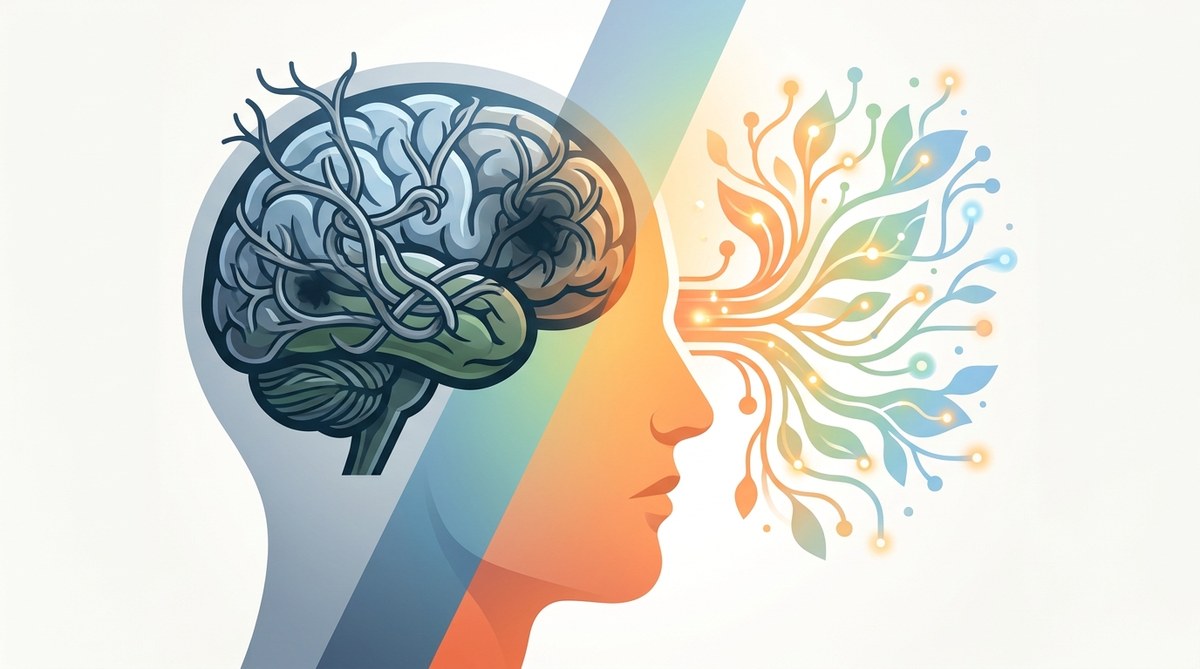
You have been through something heavy. Maybe it was a sudden loss, a painful breakup, or a frightening event that left you feeling like a stranger in your own skin. Months or even years later, you still feel stuck. Your thoughts loop. Your body tenses up at unexpected moments. You wonder why you cannot just move on. The answer lies in your brain. And the good news is that your brain is not broken. It is simply doing what it learned to do to survive. With the right help, it can learn to do something else.
When you experience trauma, your brain rewires itself for survival. This can leave you feeling stuck in a loop of fear, sadness, or numbness. Neuroplasticity is the brain’s ability to form new connections throughout life. By understanding how trauma changes your brain and using targeted strategies, you can actively reshape those neural pathways. Healing is not about forgetting what happened. It is about building a new path forward.
What Happens to Your Brain During Trauma
Think of your brain as a busy city with different neighborhoods handling different jobs. During a traumatic event, the city goes into emergency mode. The alarm system, called the amygdala, takes over. It shuts down the planning department, the prefrontal cortex, so you can react without thinking. It also disrupts the memory center, the hippocampus, which is why trauma memories often feel fragmented.
This is a survival mechanism. It works great when you are in actual danger. The problem is that after the danger passes, your brain can stay in that emergency mode. It becomes hypersensitive. A sound, a smell, or even a tone of voice can trigger the alarm as if the trauma is happening right now. Your brain has learned a new pattern. It has become wired for threat detection. This is why you feel stuck. Your neural pathways have been carved deep into a survival groove.
Neuroplasticity: Your Brain’s Superpower
Neuroplasticity is the scientific term for your brain’s ability to change its structure and function based on experience. For a long time, scientists thought the brain stopped changing after childhood. We now know that is false. Your brain remains plastic, or moldable, throughout your entire life. Every time you learn a new skill, form a new habit, or change a thought pattern, you are using neuroplasticity.
For someone recovering from trauma, this is a game changer. It means the survival wiring that feels permanent is not permanent. You can grow new neural connections. You can weaken the old ones. This is not just positive thinking. It is biology. The process is called synaptic pruning. The brain pathways you use often get stronger. The ones you ignore get weaker. By consistently practicing new responses, you literally reshape your brain.
How Trauma Changes Your Neural Pathways
Trauma does not just affect your emotions. It physically alters your brain structure. Research shows that chronic stress from trauma can shrink the hippocampus, which is responsible for memory and distinguishing past from present. It can also enlarge and over-activate the amygdala, making you more reactive. The prefrontal cortex, the part of your brain that helps you reason and stay calm, can become less active.
This is not a sign of weakness. It is a sign of adaptation. Your brain did exactly what it needed to do to get you through a dangerous time. The problem is that the adaptation outlives its usefulness. Your brain is still trying to protect you from a threat that no longer exists. Understanding this can help you stop blaming yourself. You are not failing at recovery. Your brain is just stuck in an old pattern.
A Practical Plan to Rewire Your Brain After Trauma
Healing through neuroplasticity is not about forcing yourself to think happy thoughts. It is about consistent, small actions that tell your brain it is safe now. The brain learns through repetition, not intensity. Here is a numbered list of steps you can take to start the rewiring process.
-
Create safety in your body first. Your brain needs to feel safe before it can learn. Start with simple grounding techniques. Place your feet flat on the floor. Press your palms together. Take a slow breath in for four counts and out for six. Do this several times a day, especially when you feel activated. You are teaching your nervous system that the danger is over.
-
Practice noticing without judging. Trauma often comes with harsh self criticism. When you notice a thought or feeling, just label it. Say to yourself, “I am noticing anxiety,” or “There is a flashback.” Do not try to make it go away. Do not tell yourself it is wrong. This act of mindful observation actually strengthens the prefrontal cortex and calms the amygdala. It is like a rep for your brain’s gym.
-
Introduce small moments of novelty. Your brain learns best when it encounters new things. Take a different route to work. Try a new recipe. Listen to a genre of music you have never liked before. These small acts of novelty stimulate neuroplasticity and remind your brain that the world is bigger than the trauma. It helps break the loop.
-
Seek connection with safe people. Isolation reinforces the brain’s belief that you are alone and in danger. Spending time with someone who makes you feel seen and safe sends a powerful safety signal to your nervous system. This can be a friend, a family member, or a support group. Connection is a biological necessity for healing.
-
Work with a trauma informed therapist. You do not have to do this alone. Therapies like EMDR, somatic experiencing, and cognitive behavioral therapy are designed to leverage neuroplasticity. A skilled therapist can guide you through the process safely. If you are ready to take that step, consider reading about understanding the role of therapy in healing from PTSD to learn what to expect.
Common Mistakes That Block Neuroplasticity
It is just as important to know what not to do. Some common habits can actually reinforce the trauma wiring instead of weakening it. The table below compares helpful actions with common mistakes.
| Helpful Action | Common Mistake |
|---|---|
| Pausing to breathe when triggered | Forcing yourself to “get over it” immediately |
| Acknowledging your feelings without judgment | Telling yourself you are overreacting or crazy |
| Reaching out for support | Isolating yourself and hiding your struggles |
| Doing one small grounding exercise daily | Waiting until you are in a crisis to try coping skills |
| Celebrating small progress | Comparing your recovery to someone else’s timeline |
The mistake column often feels productive. It is not. Pushing yourself too hard can retraumatize you and deepen the old neural grooves. Healing is a slow, steady process. Think of it like carving a new path through a forest. At first, it is difficult. The underbrush is thick. But every time you walk that path, it becomes clearer and easier to follow.
The Role of Daily Habits in Brain Healing
Your brain does not change during one hour of therapy a week. It changes in the 167 hours between sessions. That is where daily habits come in. The small choices you make each day either reinforce the trauma pattern or build a new one.
A bulleted list of habits that support neuroplasticity includes:
- A consistent sleep schedule. Sleep is when your brain consolidates learning and prunes unnecessary connections.
- Regular movement. Exercise increases a protein called BDNF, which is like fertilizer for your brain cells. It helps them grow and connect.
- A balanced diet. Your brain needs nutrients like omega-3 fatty acids to build healthy neural membranes.
- Limiting alcohol and substances. They can interfere with your brain’s ability to form new, healthy patterns.
- Practicing gratitude. This does not mean ignoring pain. It means noticing one small good thing each day. It trains your brain to scan for safety instead of threat.
For more on building a foundation, you can look into 7 daily habits to regulate your nervous system after trauma.
A Note on Patience and Self Compassion
“Neuroplasticity is not a switch. It is a process. You are not trying to erase the trauma. You are building a new path alongside it. Every time you choose a gentle response over a harsh one, you are rewiring your brain.” This advice comes from the growing field of trauma informed neuroscience. It reminds us that healing is a practice, not a destination.
You will have days where you feel like you are back at square one. That is normal. The old neural pathways are still there. They have just been used for a long time. When you have a hard day, do not see it as failure. See it as a reminder that the old path exists, but you are learning that you do not have to stay on it. Each time you step onto the new path, even for a moment, you make it stronger.
Your Brain Is Ready to Heal
The science of neuroplasticity gives us something powerful. It gives us proof that change is possible. Your brain is not a fixed machine. It is a living, adapting organ that responds to your experiences. When you understand why your brain feels stuck after trauma, you can stop fighting yourself. You can start working with your biology instead of against it.
Healing does not mean the trauma never happened. It means your brain no longer lives in that moment. It means you can be here, in the present, with a body that feels safe and a mind that can rest. That is not a fantasy. That is neuroplasticity in action. If you want to go deeper into the specific treatments that support this process, our guide on top evidence-based approaches to healing from trauma and PTSD is a great next step.
Start small. Be patient. Trust that every time you choose safety, connection, or a gentle breath, you are reshaping your brain. The path is there. You just have to take the first step.