
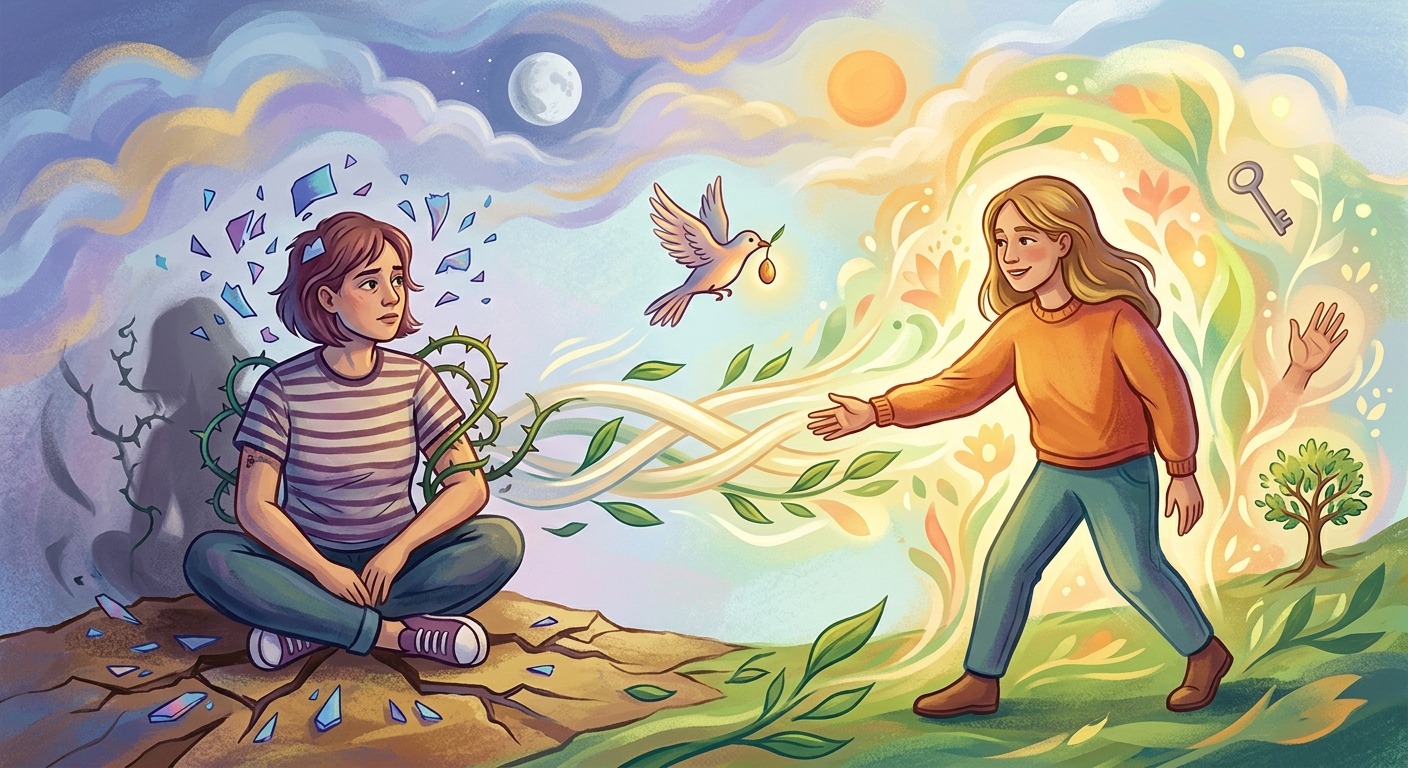
Relationships feel impossible after trauma. Not because you’re broken, not because you don’t care about the people in your life, but because your brain and body are doing exactly what they were designed to do: keep you alive. The problem is that the same alarm system that once protected you from real danger does not know how to stand down around people who are genuinely safe.
What You’ll Take Away from This Article
- Trauma changes your nervous system in ways that make closeness feel threatening, even with people who are safe.
- Emotional withdrawal, hypervigilance, and fear of vulnerability are predictable nervous system responses, not character flaws.
- Your early bonding experiences shape how trauma affects your adult relationships more than most people realize.
- You can take concrete steps to rebuild trust and safety in your relationships right now, without waiting for a major therapeutic breakthrough.
- Small, repeated actions matter more than grand gestures when retraining a nervous system shaped by trauma.
Your Nervous System Is Not Broken, It Is Overprotective
When you experience trauma, your nervous system adapts fast and without asking your permission. The brain shifts its priorities toward detecting threats above nearly everything else, including the ability to feel close to another person. This is not a malfunction. It is your brain doing its job, just in a context where that level of vigilance is no longer necessary.
Research on PTSD from the National Institute of Mental Health confirms that trauma alters brain structures involved in fear response, emotional regulation, and memory formation. These are physical changes, not personality defects. They have real consequences for how you behave in relationships.
That means when you go cold right after a tender moment, or when you feel the urge to bolt the second things get emotionally intense, you are not being difficult. You are responding exactly how a nervous system shaped by trauma would respond. Understanding that distinction changes everything, both for you and for the people who love you.
How Trauma Shows Up Between You and the People You Love
Trauma rarely announces itself with a label in a relationship. It shows up as patterns that feel confusing even to you. Three of the most common deserve a closer look.
Emotional Withdrawal
You might want connection more than anything. But the moment things get tender or vulnerable, something inside you shuts down. You go quiet. You feel distant even when you are physically sitting right next to someone you care about.
This is not coldness or disinterest. It is often a protective strategy the nervous system learned long ago: if you do not get too close, you cannot get hurt. The disconnection feels safer than the alternative, even when the person in front of you has given you no reason to be afraid.
Hypervigilance Toward Your Partner
Trauma keeps the threat radar running around the clock. In a relationship, this can look like scanning your partner’s face for signs of anger, reading a neutral tone as hostile, or bracing for conflict that is not actually coming.
You might find yourself analyzing small things. A missed text. A pause before they answer. A sigh that seems slightly off. Your brain fills in those gaps with the worst possible interpretation, because that is what it learned to do when danger was unpredictable and the cost of missing a warning sign was high.
This level of vigilance is exhausting for everyone involved. Partners often feel like they are walking on eggshells. Survivors often feel like they cannot relax, ever, and that is not an exaggeration. The body will not allow it, not yet.
Fear of Vulnerability
Closeness requires vulnerability. It asks you to let someone see you fully, including the parts you are ashamed of or afraid of. For trauma survivors, that kind of openness can feel genuinely dangerous, not just uncomfortable.
In many cases, vulnerability was punished or exploited in the environment where the trauma originally happened. The nervous system remembers that lesson with precision. Opening up becomes associated with risk, and so the instinct is to keep walls up, even with people who have actually earned your trust.
Why Closeness Can Feel Like the Threat Itself
Here is something that surprises a lot of people: sometimes the people closest to you trigger your trauma responses more intensely than strangers do. That is not a sign that something is wrong with the relationship. It is a sign that intimacy raises the stakes.
The more someone matters to you, the more you have to lose. The closer they get, the more your nervous system perceives potential for pain. It can treat love as a risk factor rather than a refuge. This leaves both people confused, hurting, and often feeling more alone than before they got together.
Partners and family members frequently take this personally. They feel shut out, rejected, or like they are somehow causing the problem. In reality, your nervous system is responding to the intensity of the bond itself, not to anything your partner has specifically done.
The Role Attachment Plays in All of This
To understand why trauma hits relationships so hard, you have to look at the foundation those relationships are built on. How you learned to bond, and how safe or unsafe connection felt in your earliest experiences, shapes the template you carry into every adult relationship.
Reading about attachment styles can help you see why certain relational patterns feel so automatic and so hard to shift. If you grew up with caregivers who were unpredictable, unavailable, or frightening, your attachment system developed around that reality. Trauma in adulthood lands differently depending on that original wiring.
Someone with an anxious attachment history might become more clingy or desperate for reassurance after trauma. Someone with an avoidant style might push partners away and insist they are fine when they are not. Someone with a disorganized early history might swing between both, wanting closeness and fearing it in the same breath, sometimes within the same conversation.
None of these patterns are permanent. But you need to understand where you are starting from before you can begin to shift the direction.
Small Daily Habits That Support Your Nervous System
Healing in relationships does not always require a therapy office or a major turning point. Sometimes it starts with small, low-pressure habits practiced consistently. The nervous system learns through repetition, not through insight alone. These habits give it new experiences to learn from:
- Ground yourself before hard conversations. Take four slow, deliberate breaths before talking about anything charged. This is not a coping trick. It is a direct signal to your nervous system that you are not in immediate danger.
- Let yourself receive care in small doses. Accept a cup of tea someone makes for you. Let a compliment land instead of deflecting it immediately. Small moments of receiving care are practice runs for larger ones.
- Notice when you actually feel safe. Actively pay attention to moments of genuine comfort in your relationships. Your brain is wired to weight threats more heavily than positive experiences. Deliberately registering safety helps rebalance that.
- Move your body after being triggered. Physical movement helps discharge the activation that builds in your nervous system during a stress response. Even a ten-minute walk makes a difference.
Concrete Steps to Rebuild Trust and Closeness
These steps are not meant to be rushed. Take them at whatever pace feels manageable, and return to earlier steps whenever you need to. Progress in trauma recovery is rarely a straight line, and backsliding is not failure.
- Name what is happening without judgment. When you feel the urge to withdraw or shut down, try saying quietly to yourself: “My nervous system is activated right now.” This is not a flaw. It is information. Naming it creates a small amount of distance between you and the automatic reaction.
- Work out a signal with your partner. Agree on a simple word or phrase that means “I am overwhelmed and need a short pause.” This removes the pressure of having to explain yourself in a flooded moment and gives your partner a clear, useful role instead of a confusing one.
- Practice being in the same space. Sit with someone safe without any particular agenda. Watch something together. Eat a meal without discussing anything heavy. Your nervous system learns safety through repeated, low-stakes contact. This is not a luxury. It is how relearning works.
- Identify your specific triggers. Keep a short journal for one week. Write down what happened right before you felt the urge to pull away or when your internal alarm spiked. Patterns become visible when you track them, and visible patterns can actually be worked with.
- Repair small ruptures quickly. Every relationship has moments of disconnection. What matters is how fast you can come back to each other after one. Practicing small, low-stakes repairs builds your nervous system’s confidence that conflict does not mean catastrophe.
- Set your own pace for vulnerability. You do not have to share everything at once. Start with something small. Notice how your partner responds. Let trust build on evidence rather than on hope alone. Gradual is not slow. Gradual is sustainable.
The Distance Between You Is Not Permanent
Trauma changes the way you relate to people you love. That is honest and worth naming plainly. But it does not set the final terms of your relationships. The nervous system that learned fear can, with time and the right conditions, also learn safety.
That learning does not happen in a single conversation. It does not happen because you force yourself to get over it. It happens in small moments of repeated connection: a pause before a conflict escalates, a check-in after a hard day, a partner who stays when you expected them to leave.
You do not have to have everything figured out before you start moving toward closeness again. You just have to be willing to take one small step, and then another. The path is not linear, and that is fine. What matters is that it keeps moving.
If you feel like the patterns in your relationships run unusually deep and you are not sure where to begin, that feeling is worth paying attention to. Reaching out to a trauma-informed therapist is not a sign of failure. For many survivors, it turns out to be the most practical decision they ever made for their relationships and for themselves.
You deserve to feel safe with the people who matter to you. That is not a platitude. It is a fact worth holding onto, especially on the days when the distance feels too wide to cross.